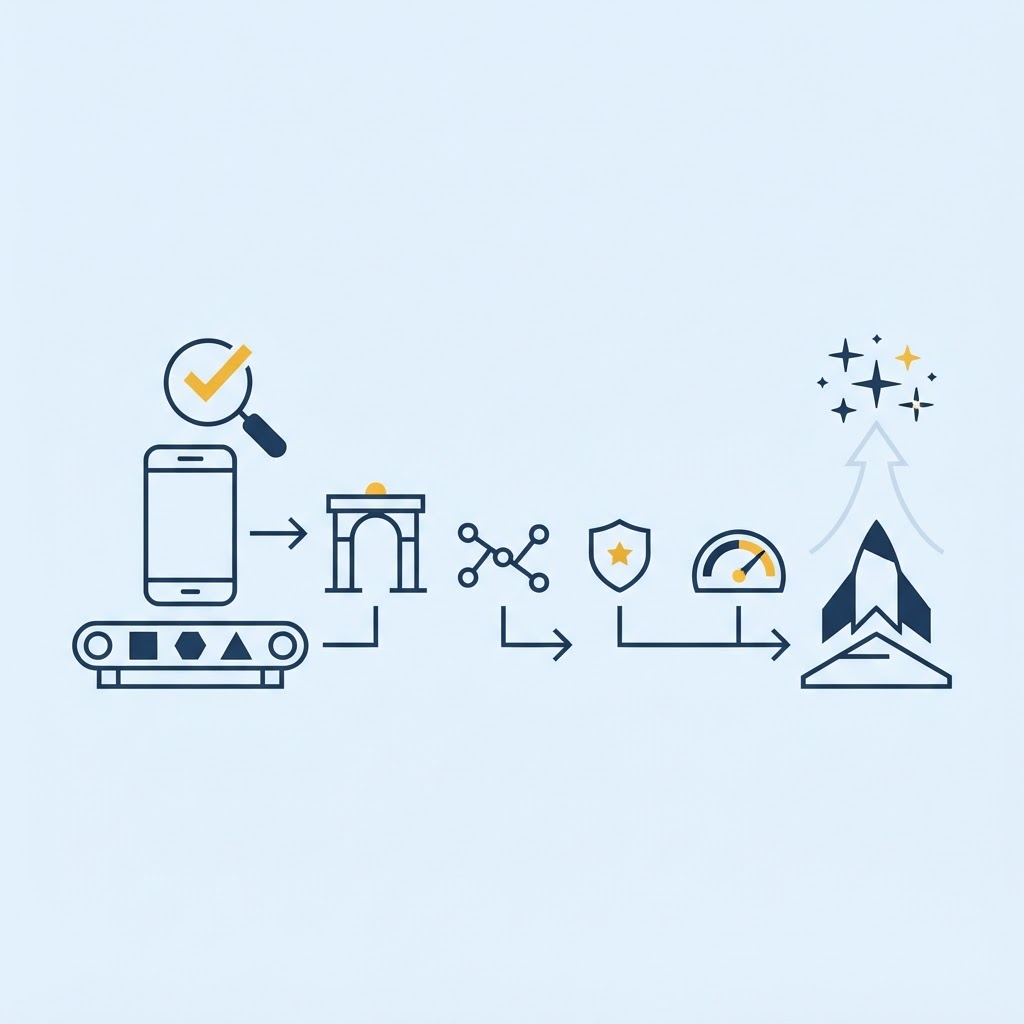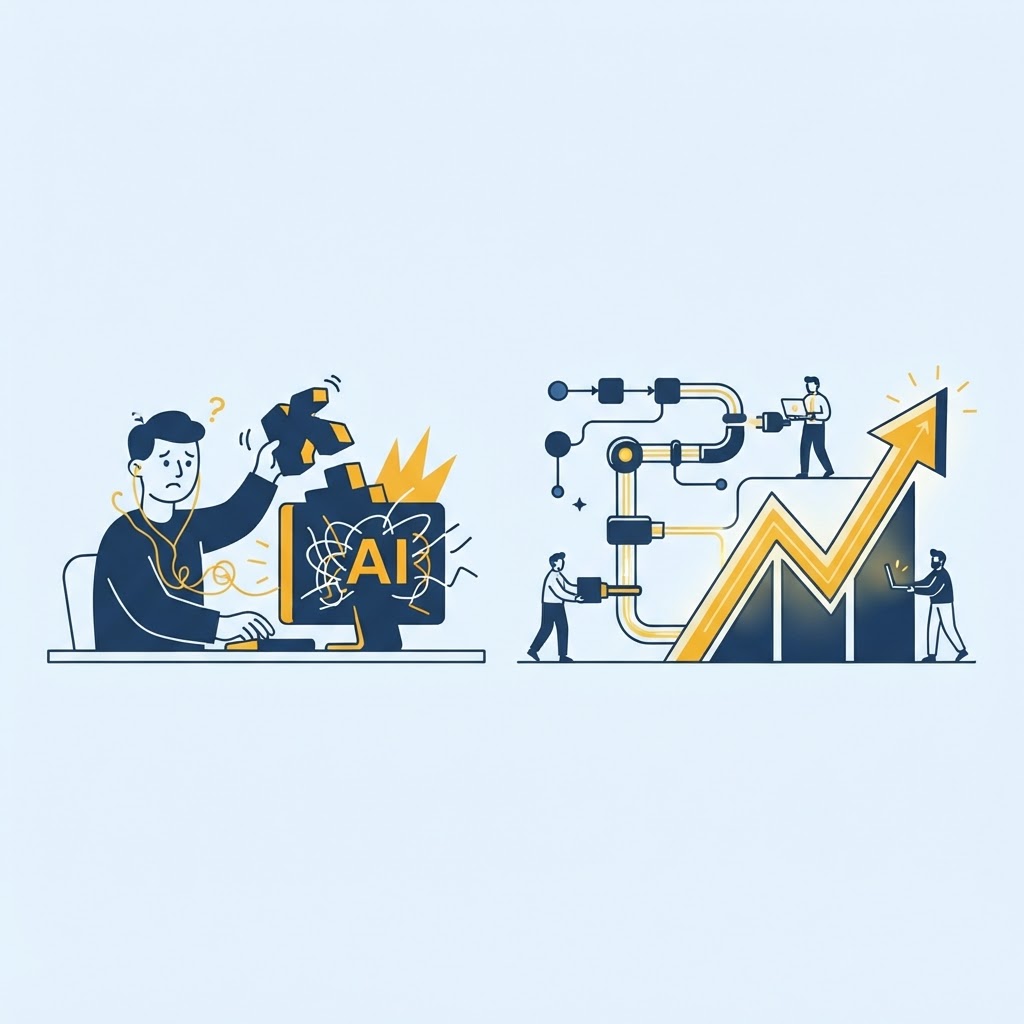
Vibe coding changed software before the term had time to settle. By allowing people to describe an application in natural language and generate large portions of it, AI tools reduced the cost of moving from idea to demonstration.
That did not make software free. It moved the expensive part.
Prototypes became abundant
A founder once needed technical help, significant time, or both to create an interactive first version. Now a small team, sometimes one person, can generate interfaces, database structures, integrations, and deployment configurations quickly.
This makes experimentation cheaper. More ideas can be tested before receiving serious investment. It also floods the market with demos, making "we built an app" less impressive on its own.
The scarce asset becomes evidence that people need it, will use it, and can trust it.
Small custom tools became viable
Traditional custom development could be too expensive for a workflow affecting five employees. AI-assisted building changes the calculation. A narrow internal tool that removes repeated administration may now justify its cost.
This expands the market for micro-software: dashboards, calculators, portals, automations, reporting tools, and industry-specific utilities that were previously trapped in spreadsheets.
Expectations rose with speed
When clients see apps generated in a weekend, they may expect all software to be fast and cheap. The visible interface reinforces that belief. Yet production work includes requirements, data migration, permissions, security, testing, accessibility, monitoring, backups, support, and change management.
AI speeds up parts of that work. It does not erase the need for it.
Software providers must explain the difference between a prototype, a minimum viable product, and an operational system. Pricing should reflect risk and responsibility, not only lines of code.
Review became more valuable
More code means more need for experienced review. AI-generated projects can contain unused dependencies, exposed secrets, inconsistent patterns, weak error handling, or logic that appears correct in the happy path.
GitHub has reported rapid growth in public projects using generative AI model tools and has urged teams to pair increased output with stronger testing and architectural review. Speed amplifies both good foundations and bad ones.
The market shifted from production to judgment
Basic implementation is becoming less scarce. Choosing what to build, integrating it into real operations, protecting users, and maintaining it over time are not.
Agencies and freelancers that sold coding hours alone will feel pressure. Those that combine product thinking, domain expertise, design, engineering, and accountability can deliver more value with smaller teams.
Vibe coding changed the software market by making creation accessible and iteration fast. The next advantage will not come from generating the most code. It will come from knowing which code deserves to exist and proving that it can survive outside the demo.
Buyers need a new procurement question
Instead of asking how many hours the build will take, ask what is included after generation: requirements, design, testing, accessibility, security review, deployment, documentation, ownership, monitoring, and support. Compare proposals at the same level of readiness. A cheap prototype and a maintained production system are different products, even when the screenshots look nearly identical.