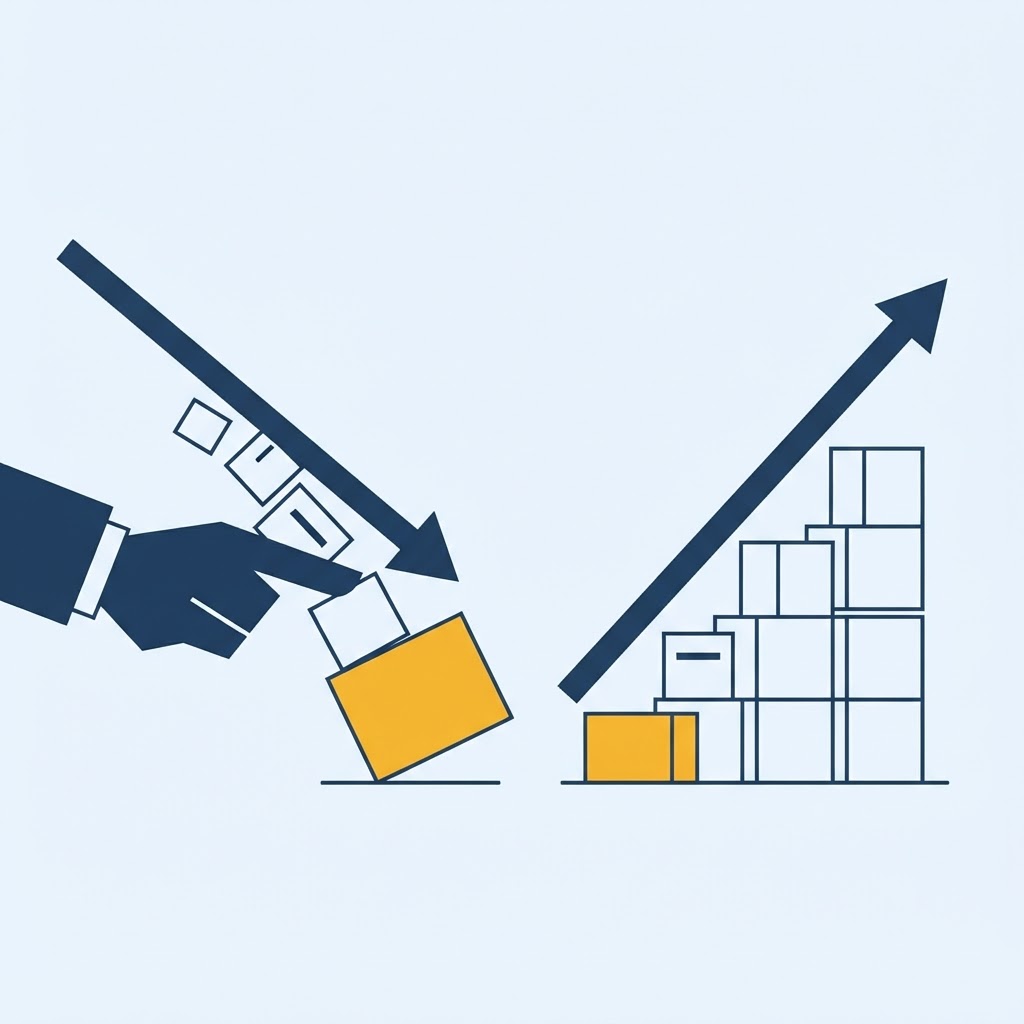
When revenue slows, marketing is often one of the first budget lines under review. The logic seems reasonable: payroll keeps the doors open, inventory keeps products moving, and marketing can feel optional.
The problem is that cutting marketing does not only reduce an expense. It can also reduce the flow of future customers precisely when the business needs them most.
Why marketing gets cut first
Marketing is easier to pause than rent, wages, insurance, or loan payments. Its impact can also be delayed, which makes it look less urgent on a monthly income statement. If reporting focuses on impressions rather than revenue, owners may have little evidence to defend the spend.
Some marketing deserves to be cut. Waste, weak offers, poor targeting, and campaigns with no measurement should not survive simply because they are called "brand building." But cutting every channel equally is not strategy. It is panic with a spreadsheet.
Disappearing creates a second problem
Customers do not stop making decisions during an economic slowdown; they become more selective. They compare options, look for proof, and take longer to trust. If your business becomes less visible while competitors remain useful and present, demand can shift away from you.
Industry research has repeatedly warned about going dark. Nielsen has reported that brands that stop advertising risk long-term revenue and brand-equity losses, while the Institute of Practitioners in Advertising has compiled evidence linking continued investment during difficult markets with stronger recovery.
That does not mean a small business should blindly maintain every dollar. It means visibility is an asset, and rebuilding it later can cost more than protecting it now.
Optimize before you cut
Start by separating marketing into three groups:
- Proven demand generators, such as profitable search campaigns or strong referral programs
- Long-term assets, such as useful content, reviews, email lists, and local search visibility
- Unproven or underperforming activity that needs improvement or removal
Protect the first two. Challenge the third.
Next, adjust the message. During tighter periods, customers need clearer value, lower perceived risk, and stronger proof. Explain the result, show testimonials, make pricing or next steps easier to understand, and follow up faster. A better offer can improve performance without increasing media spend.
Measure cash impact, not marketing theatre
Track qualified leads, close rate, acquisition cost, gross profit, and payback period. If a channel costs 1,000 dollars and reliably produces 4,000 dollars in profitable work, eliminating it to save 1,000 dollars is not a saving.
The right recession strategy is not "spend at all costs." It is "do not cut the engine while trying to keep the vehicle moving." BoostBC helps small businesses identify what is producing demand, remove what is not, and protect the marketing assets that make recovery possible.
Build a slowdown plan before you need it
Choose the channels you would protect, reduce, test, or stop at three different revenue levels. Record the reason for each decision and the metric that would trigger it. This turns an emotional cut into a prepared response. Review the plan quarterly because channel economics and customer behaviour change. A recession should alter your message and allocation; it should not erase your ability to reach the market.