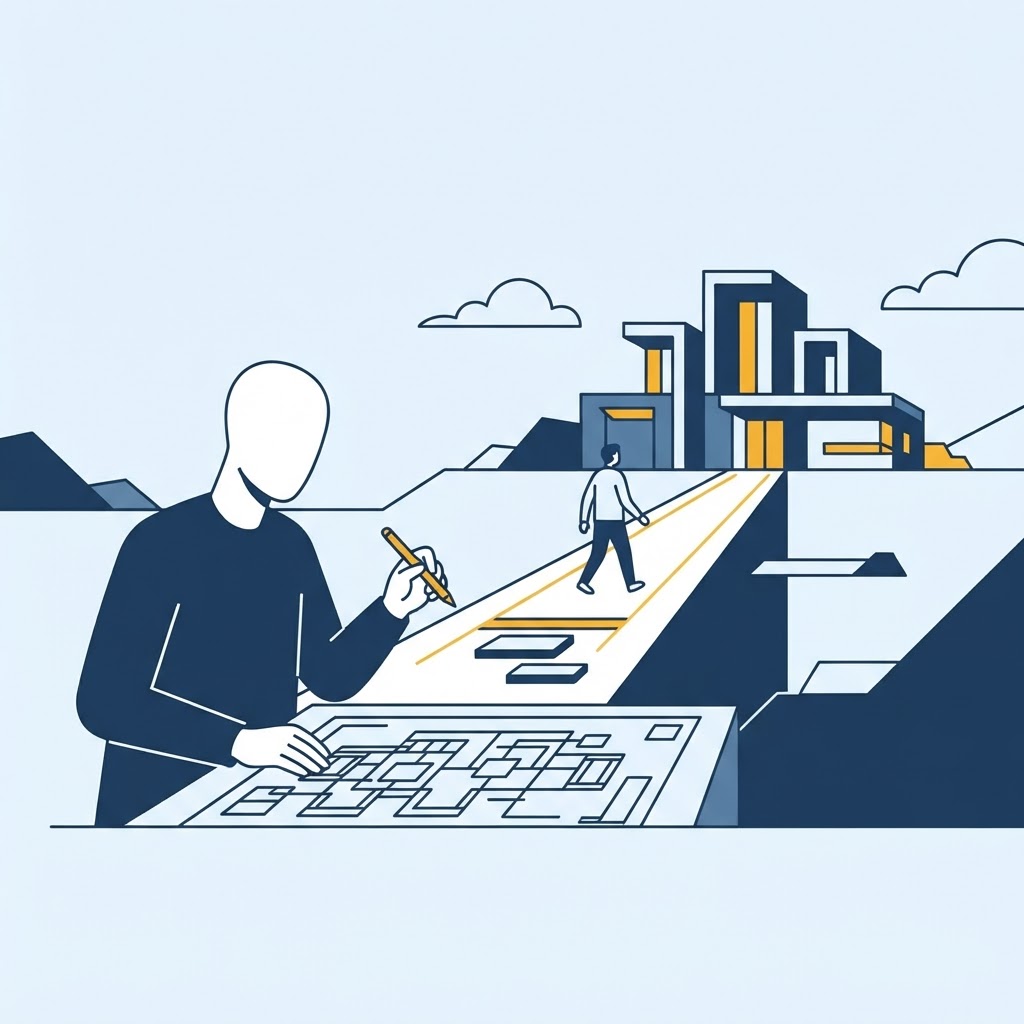
Making one sale can happen in a day. Building a business that delivers the same result hundreds of times without exhausting the owner can take years.
That is why scaling feels slow. You are not simply doing more of the same work. You are replacing personal effort with a coordinated system while demand, quality, cash, and people keep moving.
Success reveals the next bottleneck
More leads expose weak follow-up. More sales expose limited delivery capacity. Hiring exposes missing documentation. Delegation exposes unclear standards. New locations expose inconsistent leadership. Better software exposes bad data.
Every solved constraint reveals another. This can feel like failure when it is actually the mechanics of growth.
People do not scale like software
An automation can run instantly after setup. A person needs recruitment, onboarding, context, practice, feedback, trust, and a reason to stay. They will interpret instructions differently and encounter situations the process did not anticipate.
Owners often slow this stage by taking work back whenever it is not completed exactly as they would do it. The faster response is not always the scalable response. Improve the instruction, define the standard, and coach the decision.
Cash moves at a different speed than revenue
Growth can require spending before payment arrives: payroll, equipment, inventory, software, space, marketing, and professional support. A profitable project can still create a cash shortage if the timing is wrong.
Track cash flow, gross margin, payment terms, capacity, and the cost of acquiring and serving customers. Revenue is not enough to show whether growth is healthy.
Quality becomes a system
At a small size, the owner catches problems through proximity. At scale, quality must be designed into checklists, training, permissions, review points, customer feedback, and metrics.
Document the critical few processes first: sales handoff, service delivery, billing, complaint resolution, and data protection. Do not create a manual nobody uses. Build instructions alongside real work and improve them when reality disagrees.
The market needs time too
Customers need repeated exposure and proof. Referral networks take time to compound. Search visibility, reviews, brand recognition, and partnerships are assets built through consistency.
Trying to force speed can create discounts, poor-fit customers, rushed hires, and fragile technology that generate cleanup later.
Scale the result, not the chaos
Before adding volume, ask whether the offer is profitable, delivery is repeatable, responsibilities are clear, and the customer experience is measurable. Fix the process at a manageable size.
Scaling takes so long because a business is a living network, not a copy-and-paste command. Sustainable growth is slower than hype and faster than rebuilding after preventable mistakes. Measure progress by how much stronger the system becomes, not only by how quickly the top line moves.
Track owner dependence
Once a month, list the decisions and tasks that could not happen without the owner. Choose one recurring item to document, delegate, automate, or eliminate. Track whether it stays transferred. Revenue can grow while dependence remains unchanged, so this measure reveals a form of progress the income statement misses: the business learning to operate through a system instead of one person memory.