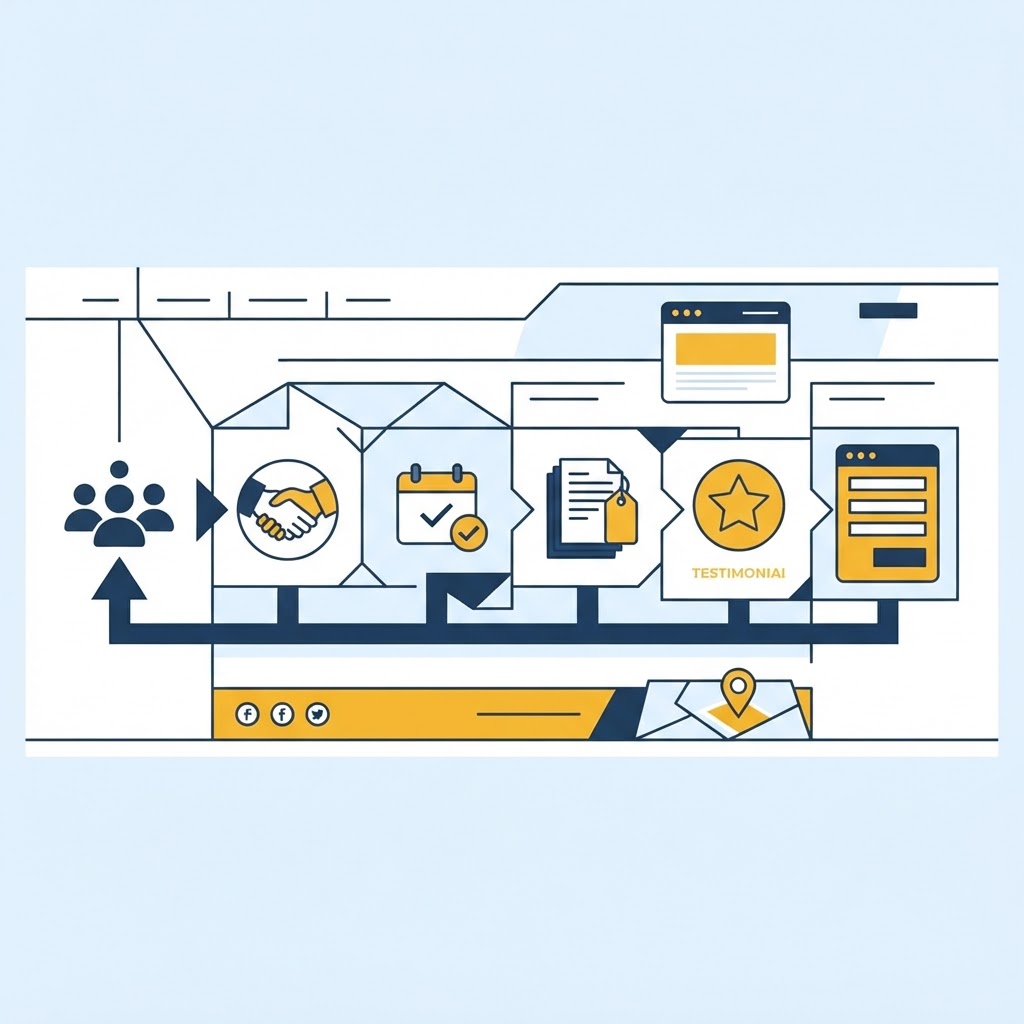
A service-based business website does not need endless animation, twenty menu items, or a clever slogan nobody understands. It needs to answer a visitor questions quickly enough to turn interest into action.
Whether you run a plumbing company, clinic, consultancy, salon, cleaning service, or creative studio, the essentials are remarkably similar.
A clear statement of what you do
The top of the home page should tell people what you offer, who it is for, and where you provide it. "Solutions that move you forward" may sound polished, but it makes the visitor do the interpreting.
Try something concrete: "Managed IT support for small businesses in Kelowna" or "Residential painting across the Central Okanagan." Clarity helps customers and search engines understand the page.
One page for each important service
A list of six services in a single paragraph is not enough. Give your core services dedicated pages that explain the problem, process, result, common questions, and next step.
This improves the customer experience and gives each service a better opportunity to appear for relevant searches. Avoid creating dozens of nearly identical pages for every keyword or nearby city. Useful, specific content wins over thin duplication.
Proof that reduces risk
Customers are inviting you into their business, home, finances, health, or project. They want evidence that you are competent and reliable.
Use genuine reviews, case studies, project photos, credentials, guarantees, team information, and a clear explanation of your process. Place proof near the claims it supports. A testimonial beside a service is more persuasive than a forgotten review page.
Simple ways to contact you
Every important page needs a clear call to action. Use language that describes the step: "Request an estimate," "Book a discovery call," or "Ask about availability."
Keep forms short enough to finish, but collect enough information to respond intelligently. Make phone numbers clickable on mobile. Explain expected response time and what happens after submission.
Local trust signals
If you serve a geographic area, say so naturally. Include accurate contact details, service areas, local project examples, and links to an up-to-date Google Business Profile. Your name, address, and phone information should remain consistent wherever it appears.
The technical basics
Your site should load quickly, work on common screen sizes, use HTTPS, include readable contrast and descriptive headings, and be easy to update. Set up analytics and conversion tracking with appropriate consent and privacy practices. Back it up and keep software maintained.
Finally, include a privacy policy and any terms, accessibility information, licensing details, or disclaimers relevant to your business. Requirements vary, so obtain professional advice when needed.
The best service business website is not the one with the most features. It is the one that makes choosing you feel clear and low-risk. BoostBC designs websites around that job: attract the right visitor, answer the right questions, and make the next step easy.
Review it like a customer
Ask someone unfamiliar with the business to use the site for one task: find the right service and request it. Watch without coaching. Note every hesitation, unanswered question, and accidental click. Then repeat on a phone. This simple usability test often produces a more valuable improvement list than debating colours, because it shows where real understanding and action break down.